

Watsonville, CA
Cooking Range Repair
When your cooking range stops heating correctly, a burner will not ignite, controls stop responding, or cooking temperatures become inconsistent, we help identify the cause and determine the appropriate repair.
Other Appliance Repair Services
Cooking Range Repair in Watsonville, CA
A cooking range has one main job: produce and control heat where you need it. When that process changes, the problem can show up in many ways. A gas burner may click without lighting, an electric element may stay cold, or the range may heat but fail to maintain the temperature you selected.
Cooking range repair in Watsonville, CA requires understanding how the appliance creates heat and how that heat is controlled. Gas ranges rely on fuel delivery and ignition, while electric models use electrical power and heating components. Some modern ranges combine multiple technologies and electronic controls.
We focus on the actual cooking symptom rather than treating every range problem as the same failure. The type of range, the affected burner or function, and when the problem occurs can all help narrow down the cause.
When Your Cooking Range Stops Cooking Normally
Range problems are often easiest to notice while preparing food. A burner may take longer than usual to heat, one side of the cooking surface may behave differently from another, or the appliance may stop responding to a selected setting.
Some problems affect only one burner, while others involve the range's controls or power system. Recognizing the difference is useful because the same symptom can come from very different components.
A range that still turns on is not necessarily operating correctly. If the heat level, ignition, temperature response, or burner behavior has changed noticeably, the appliance may need further evaluation.
Gas Cooking Range Problems
Gas ranges use fuel, ignition, burner assemblies, and control components to produce adjustable cooking heat. A fault in any part of this process can affect one burner or several burners.
Gas ignition problems can sometimes be associated with moisture, debris, incorrectly positioned burner components, or an ignition-system fault. The condition of the burner assembly and ignition system can both influence how reliably a flame starts.
Gas Burner Will Not Ignite
If a burner does not light when the control is turned to the ignition position, the issue may involve the spark system, electrode, burner head, burner ports, burner cap, power supply, or gas delivery.
A burner that clicks but does not light is different from one that produces no clicking or sparking at all. That distinction can help identify whether the problem is more closely related to ignition or another part of the system.
Gas Burner Keeps Clicking
Continuous clicking can occur when an ignition system continues trying to produce a spark after the burner has already been lit or when a burner has difficulty establishing a flame. Moisture around the burner area can also contribute to intermittent clicking.
If clicking continues with the controls off, the situation should not simply be ignored. The range may require inspection of its ignition and control components.
Gas Flame Is Weak or Uneven
A flame that looks unusually weak, irregular, or different from the normal pattern can be associated with blocked burner openings, an incorrectly positioned burner cap, or another burner-related issue.
The appearance of a gas flame can vary by burner design, so an unusual-looking flame should be considered together with the appliance model and cooking performance.
One Gas Burner Works but Another Does Not
When only one burner stops working, the problem may be isolated to that burner assembly, its ignition point, control, or gas-flow path rather than the entire range.
Comparing the affected burner with the others can provide useful information. If several burners develop the same symptom at once, the underlying cause may be broader.
Gas Range Does Not Produce Proper Heat
A gas burner can ignite while still failing to produce the expected cooking performance. Weak flame, inconsistent flame behavior, burner restrictions, or control-related problems can all affect the amount of usable heat.
The flame should be evaluated according to the range's design rather than assuming that every visible difference represents a fault.
Electric Cooking Range Problems
Electric ranges create cooking heat through electrical heating components rather than a gas flame. Because the heating path is different, electric range symptoms require a different diagnostic approach.
A burner that does not heat, a surface element that cycles incorrectly, or an appliance that powers on without producing sufficient heat can involve the element, receptacle, wiring, switches, controls, or power supply.
Electric Burner Not Heating
An electric burner that remains cold can have a failed heating element, poor electrical connection, damaged receptacle, control problem, or another electrical fault.
When an individual element stops producing heat, the element and the components supplying power to it may need to be evaluated separately.
One Electric Element Stops Working
When one heating element fails while the other cooking zones continue to operate, the issue may be localized to that element, its connection, switch, or control circuit.
A single failed burner does not automatically mean the entire range has reached the end of its useful life.
Electric Burner Heats Unevenly
Uneven heating can make cooking difficult because the selected setting no longer produces the expected result. Depending on the range design, the cause may involve the heating element, temperature control, sensor, connection, or electronic controls.
Electric Range Turns On but Does Not Heat
A range can have working lights or a display while still experiencing a heating failure. The control system may have power even though a heating circuit or component is not operating correctly.
When the display works but cooking heat is missing, the heating path and related controls should be evaluated rather than assuming the appliance has no power.
Gas vs. Electric Range Repair
Gas and electric ranges may perform the same cooking tasks, but they create heat in different ways. Understanding that difference helps explain why similar symptoms can require completely different repairs.
Gas Range Operation
A gas range uses fuel and an ignition system to establish a controlled flame at the burner. The burner assembly, ignition components, controls, and fuel path all have to work together for normal cooking.
Electric Range Operation
An electric range sends electrical power through heating components that convert that energy into heat. Controls regulate when and how those components operate.
Why the Difference Matters
A gas burner that will not light may require attention to ignition or burner components, while an electric burner that remains cold may involve an element or electrical circuit. The visible symptom may look similar to a homeowner, but the underlying systems are not the same.
Range Ignition Problems
Ignition is one of the most recognizable trouble areas on a gas cooking range. A normal ignition sequence needs the control, electrical ignition system, electrode, burner, and fuel delivery to work together.
If the burner repeatedly clicks without lighting, never produces a spark, or lights inconsistently, the specific behavior can help narrow the diagnostic path.
No Spark at the Burner
When there is no clicking or visible ignition activity, the issue may involve the range's electrical supply, ignition control, electrode, switch, or another ignition component.
Spark Is Present but the Burner Does Not Light
A visible spark does not guarantee that the burner will ignite. Burner openings, cap placement, moisture, fuel delivery, and the condition of the ignition point can all influence whether a flame is established.
Ignition Works Intermittently
A burner that sometimes lights and sometimes does not may have a developing ignition, burner, control, or connection problem. Repeated intermittent behavior is worth evaluating rather than treating as normal operation.
Cooking Temperature and Heat-Control Problems
Cooking performance depends not only on whether a burner produces heat, but also on whether the range responds correctly to the selected setting. A temperature that feels too high, too low, or inconsistent can affect everything from simmering to baking.
Modern ranges may use mechanical controls, electronic controls, sensors, cycling systems, or a combination of these technologies. The appropriate diagnostic path depends on the appliance design.
Range Does Not Maintain the Selected Heat
If a burner repeatedly becomes much hotter or cooler than expected, the control system or heating component may not be regulating the appliance correctly.
Cooking Takes Longer Than Usual
A noticeable increase in cooking time can indicate reduced heating performance, an element problem, burner restriction, incorrect flame behavior, or another issue affecting heat output.
Heat Is Inconsistent Between Burners
Different burners are designed for different heat capacities, so they will not necessarily behave identically. However, a sudden change in one burner compared with its previous performance can indicate a problem that deserves attention.
Range Controls and Electrical Problems
The controls are the connection between the user and the range's heating systems. A problem with a knob, switch, touch panel, display, wiring, or electronic control can prevent the appliance from responding normally even when the heating components themselves are intact.
Control Panel Not Responding
A control panel that does not react to touch or button commands can affect one function or the entire range. Depending on the model, the cause may involve the user interface, electronic control, power supply, or another connected component.
Range Display Not Working
A blank display can be related to power, wiring, control electronics, or the display assembly. If other range functions still operate, that information can help narrow the problem.
Burner Knob or Switch Problems
A mechanical knob or electrical switch controls the selected burner setting on many ranges. Damage, wear, or a failed switch can prevent a burner from responding correctly to the user's setting.
Range Turns Off Unexpectedly
Unexpected shutdowns can involve power interruptions, overheating protection, electronic controls, wiring, or other safety-related components. Repeated shutdowns should be investigated rather than assumed to be a normal operating feature.
Cooking Range Components We Diagnose
The components involved in a range repair depend heavily on whether the appliance uses gas, electricity, induction technology, or a combination of systems. We focus on the parts connected to the reported symptom instead of replacing components based only on appearance.
Gas Burners
Gas burners distribute fuel and flame across the cooking surface. Burner openings, caps, and heads need to be correctly positioned and free of restrictions for normal operation.
Spark Igniters and Electrodes
Ignition components create the spark used to light gas burners on applicable ranges. A failure in this part of the system can prevent a burner from lighting even when gas is available.
Electric Heating Elements
Electric elements convert electrical energy into cooking heat. A damaged or failed element can leave an individual cooking zone cold or reduce its ability to heat normally.
Burner Switches and Controls
Switches and control components determine how much heat a burner receives and how the user-selected setting is translated into appliance operation.
Temperature Sensors
Temperature sensors provide information used by the control system to monitor heat conditions. A sensor problem can contribute to inaccurate or inconsistent temperature behavior on applicable models.
Electronic Control Board
The control board coordinates multiple functions on modern ranges. A control fault can affect displays, heating commands, ignition functions, or other electronic operations depending on the appliance.
Wiring and Electrical Connections
Electrical connections carry power and control signals between components. Loose, damaged, or failed connections can produce intermittent or complete loss of a range function.
Gas Valves and Related Controls
Gas-related control components regulate fuel delivery within the appliance. Problems in this area require appropriate safety precautions and model-specific diagnosis.
Gas, Electric, Dual-Fuel, and Induction Ranges
Cooking ranges come in several configurations. Although they share the same purpose, their heating technology and internal controls can be very different.
Gas Ranges
Gas ranges use burners and controlled fuel combustion for cooking. Ignition, flame quality, burner condition, and gas-related controls are important parts of their operation.
Electric Ranges
Electric ranges use heating elements and electrical controls to produce cooking heat. Element condition, connections, switches, sensors, and electronic controls can all affect performance.
Dual-Fuel Ranges
Dual-fuel ranges combine different heating technologies, typically using gas for one cooking function and electricity for another. This creates a more varied internal system that must be diagnosed according to the affected function.
Induction Cooking Ranges
Induction ranges generate heat through electromagnetic technology rather than a conventional gas flame or exposed electric heating element. Their controls and power electronics are different from traditional ranges, so symptoms should be evaluated according to the specific induction system.
Uneven Cooking: What Your Range May Be Telling You
Uneven cooking is not always caused by the same type of failure. If one burner suddenly performs differently from the others, that comparison can provide useful information about where the problem may be located.
A gas flame that has changed shape, an electric element that heats inconsistently, or a control that no longer responds predictably can all affect the final cooking result.
Instead of judging the appliance only by whether it turns on, it is more useful to consider whether each cooking zone is producing the type and level of heat expected from that range.
How We Approach Cooking Range Diagnosis
A good range diagnosis starts with the cooking symptom and follows the heat path toward the component responsible. The diagnostic approach differs between gas, electric, induction, and dual-fuel appliances.
Start With the Cooking Symptom
The first step is understanding what changed: ignition, heat output, temperature control, burner response, display operation, or another function.
Identify the Range Technology
Determining whether the affected function uses gas, electric heating, induction, or a combination of systems helps narrow the components involved.
Compare the Affected Function
When possible, the behavior of the problem burner or cooking zone can be compared with the other zones. This can help determine whether the issue appears isolated or broader.
Trace the Heat and Control Path
The relevant path may include the burner, igniter, element, switch, sensor, wiring, valve, or electronic control. The symptom determines which areas require closer attention.
Confirm the Source of the Failure
The goal is to identify the component or condition most closely connected to the problem rather than replacing unrelated parts based on a general symptom.
Verify Normal Operation
After the appropriate repair, the affected cooking function can be checked to confirm that the range responds correctly and produces the expected operation for its design.
Cooking Range Safety Matters
Cooking ranges combine heat with either gas, electrical power, or both. That makes unusual operation more important than a minor inconvenience on an ordinary household appliance.
If a gas range has a persistent gas odor, repeated ignition failure, or another condition that suggests a gas-supply problem, do not treat it as a routine DIY repair. Leave the appliance off and follow appropriate gas-safety procedures.
Electrical range problems also require care because the appliance can contain high-voltage electrical circuits. Troubleshooting should be performed with the appropriate safety precautions for the appliance and repair task.
Repair or Replace Your Cooking Range?
A range that develops one repairable problem does not automatically need to be replaced. The better decision depends on the appliance's age, overall condition, type of failure, repair requirements, and expected usefulness after the repair.
A diagnosis can help separate a localized component problem from a broader condition affecting the appliance. This gives homeowners better information when deciding whether continued repair makes sense.
Cooking Range Repair in Watsonville, CA
When a cooking range stops behaving normally, the effect is felt quickly because the appliance is central to everyday meal preparation. A burner that will not light, an electric element that stays cold, or a range that no longer maintains expected heat can make even simple cooking difficult.
We provide cooking range repair in Watsonville, CA for gas and electric range problems involving burners, ignition, heating, controls, temperature behavior, and related components.
Our approach is centered on the actual symptom and the technology used by the appliance, helping determine where the problem is occurring and what type of repair may be appropriate.
Schedule Cooking Range Repair in Watsonville, CA
Having trouble with your cooking range? Contact us to discuss the symptoms and schedule cooking range repair in Watsonville, CA. Whether a gas burner will not ignite, an electric element is not heating, or the range is behaving inconsistently, identifying the cause is the first step toward the right repair.
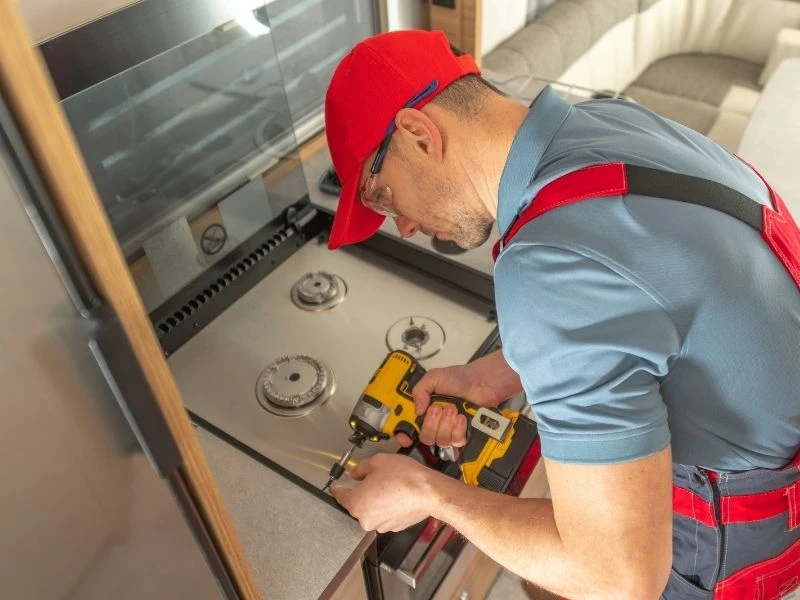 Cooking Range Repair
Common issues
- Gas burner not igniting
- Gas burner keeps clicking
- Gas flame is weak or uneven
- One burner not working
- Electric burner not heating
- Electric range heating unevenly
- Range not heating properly
- Range takes too long to heat
- Range control panel not responding
- Range display not working
Brands we service
Whirlpool, GE, GE Profile, KitchenAid, Frigidaire, LG, Samsung, Maytag, Bosch, Electrolux, Kenmore, Amana, and most other major residential brands.
FAQs
Cooking Range Repair Questions
Answers to common questions about cooking range repair in Watsonville, CA.
Why is my gas range burner not igniting?
A gas burner may fail to ignite because of moisture or debris around the burner, an incorrectly positioned burner cap or electrode, an ignition-system problem, or another issue affecting gas or spark delivery.
Why does my gas stove keep clicking?
Repeated clicking can occur when the ignition system continues trying to establish a flame or when moisture is present around the burner area. If clicking continues with the controls off, the range may need service.
Why is one burner on my range not working?
If only one burner has stopped working, the problem may be isolated to that burner, its heating element or ignition system, control switch, connection, or related component. The correct diagnosis depends on whether the range is gas or electric.
Why is my electric range burner not heating?
An electric burner that does not heat can have a failed heating element, connection, receptacle, switch, control, or power-related issue. The element and the components supplying power to it may need to be evaluated separately.
Why is my gas flame weak or uneven?
An uneven gas flame can be related to blocked burner openings, an incorrectly positioned burner cap, burner condition, or another issue affecting the burner assembly. The range model and normal flame pattern should also be considered.
Why does my cooking range take too long to heat?
Slow heating can result from reduced burner or element performance, an ignition problem, electrical issues, temperature-control problems, or another condition affecting heat output. The specific cause depends on the range technology and affected cooking function.
Why is my range control panel not responding?
A non-responsive control panel can be related to the user interface, electronic control board, power supply, wiring, or another control-system component. The rest of the appliance's behavior can help determine where the issue is located.
Why does my electric range turn on but not heat?
A range can have power to its display or controls while still having a failure in a heating circuit. Heating elements, switches, wiring, relays, controls, or other electrical components may need to be evaluated.
Is a clicking sound from a gas range always a problem?
Some clicking can be part of normal ignition operation, and certain models may produce multiple ignition clicks. Continuous clicking after ignition or clicking when burners are off can indicate a condition that requires attention.
Should I repair or replace my cooking range?
The decision depends on the range's age, overall condition, type of failure, repair requirements, and expected usefulness after repair. A proper diagnosis can help determine whether repairing the existing appliance is practical.
Need a repair?
Need cooking range repair?
Tell us what’s wrong and we’ll help you find the next available appointment.