

Watsonville, CA
Cooktop Repair
When a cooktop stops responding the way it should, the problem can affect a single cooking zone or the entire appliance. We diagnose the system behind the symptom and determine the appropriate repair.
Other Appliance Repair Services

Cooktop Problems Often Start With One Small Change
A cooktop rarely announces exactly which component has failed. Instead, the first clue may be a burner that takes longer to heat, a flame that behaves differently, a control that stops responding, or an induction zone that no longer recognizes a pan.
Those details matter because cooktops use different technologies to create and control heat. A gas burner, radiant electric element, and induction zone can produce a similar complaint while requiring completely different diagnostic paths.
Our cooktop repair service in Watsonville, California, USA focuses on the appliance's actual behavior so the repair is based on the cause rather than a guess from the symptom alone.
Which Type of Cooktop Do You Have?
Identifying the cooking technology is an important first step. Gas, electric, and induction cooktops each use different components to produce heat, regulate temperature, and respond to the user.
That distinction allows the diagnostic process to focus on the systems that actually apply to your appliance.
Gas Cooktops
Gas models rely on controlled fuel flow and an ignition system to establish the burner flame. Problems can appear as repeated clicking, delayed ignition, weak flame behavior, or a burner that does not light normally.
Because gas and electrical ignition work together, unusual ignition or gas-related behavior should be professionally evaluated rather than repeatedly tested by trial and error.
Electric Cooktops
Electric cooktops use heating elements and control components to produce and regulate heat. If one zone remains cold while the others operate, the affected heating path can be investigated separately from the rest of the surface.
Changes in heat output or unexpected cycling can also point toward the control side of the appliance.
Induction Cooktops
Induction systems generate heat differently from conventional electric and gas appliances. The cooking zone must interact correctly with compatible cookware and the electronic system controlling induction power.
A zone that does not detect a suitable pan, stops heating, or behaves inconsistently can therefore require electronic and sensor-related diagnosis rather than a traditional burner repair.
When the Cooking Zone Is Not Performing Normally
The difference between a completely dead cooking zone and one that still produces some heat can be significant. The same applies when only one burner is affected while the rest of the cooktop continues working normally.
Comparing the affected zone with the working zones can help establish whether the failure is isolated or connected to a broader control or power issue.
No Heat From One Zone
A single cold burner or cooking zone can involve its heating component, wiring, control, ignition system, or another dedicated part of the appliance.
Heat Takes Too Long
Slower-than-normal heating can make everyday cooking frustrating and may indicate that a component is no longer operating at its expected level. The cooktop type determines which systems need to be checked.
Heat Is Difficult to Control
If a burner does not respond properly to changes in the selected setting, the issue may involve the control mechanism, sensing system, or the component responsible for regulating heat.
Only Certain Settings Work
When a cooking zone responds at some settings but not others, the pattern can provide useful information about the control path and the way heat is being regulated.
Gas Ignition Is a System, Not Just a Spark
A gas cooktop that clicks without establishing a normal flame can have several possible causes. The ignition components, burner area, controls, and fuel delivery all influence what happens when a burner is turned on.
The number of affected burners also matters. A single burner behaving differently can suggest a localized problem, while several burners developing the same symptom may require a broader look at the appliance.
If you notice a suspected gas leak or strong gas odor, stop using the appliance and follow appropriate gas-safety procedures rather than attempting to diagnose the appliance yourself.
Why Induction Cooktops Can Be Misleading
An induction cooktop may appear powered and responsive while a cooking zone still refuses to heat. Because induction depends on cookware detection and electronic power control, the visible symptom does not always reveal the underlying fault.
A suitable pan that is no longer recognized, a zone that shuts down unexpectedly, or inconsistent heating can involve different parts of the electronic system.
This is why induction service needs to be approached according to the appliance's technology instead of applying the same assumptions used for radiant electric burners.
Controls Can Fail Without the Burner Looking Damaged
Modern cooktops increasingly rely on electronic controls, touch panels, displays, sensors, and other interfaces. A surface can look completely normal while the control system prevents the appliance from operating correctly.
A useful diagnosis follows the command from the user's input through the control system to the actual heating response.
Touch Panels
Unresponsive areas, intermittent inputs, or controls that register commands incorrectly can indicate a problem in the touch-control system or related electronics.
Physical Controls
Cooktops using knobs or mechanical switches depend on those controls to communicate the selected heat level. Changes in how a knob feels or responds can be an important clue.
Displays and Error Messages
A displayed code can indicate that the appliance has detected a particular operating condition. The correct interpretation depends on the specific model and its control system.
Lock and Safety Functions
Some cooktops include control-lock features that intentionally prevent operation. When a panel appears unresponsive, the appliance's control state should be considered before assuming a component has failed.
A Cooktop Diagnosis Should Follow the Failure Pattern
Good appliance repair is not simply about identifying a familiar symptom. The timing, location, and behavior of the failure can help narrow down which system needs attention.
For example, a cooktop that never powers on presents a different diagnostic situation from one that powers on but loses a single cooking zone after several minutes.
Start With the Appliance Type
Gas, electric, and induction models use different heating systems, so identifying the technology establishes the correct starting point.
Separate Isolated From Whole-Appliance Problems
If one zone fails while everything else operates normally, the affected circuit or component can be investigated differently from a cooktop that has lost power throughout.
Observe the Control Response
Whether the appliance responds to a knob, touch command, ignition request, or power setting can help determine where the operating sequence changes.
Check When the Failure Happens
A problem that appears immediately can have a different diagnostic path from one that occurs only after the cooktop has been operating for a period of time.
Match the Repair to the Appliance
Once the affected system is identified, the model, condition, age, and nature of the failure can be considered when determining the practical repair.
Cooktop Repair for Residential and Commercial Kitchens
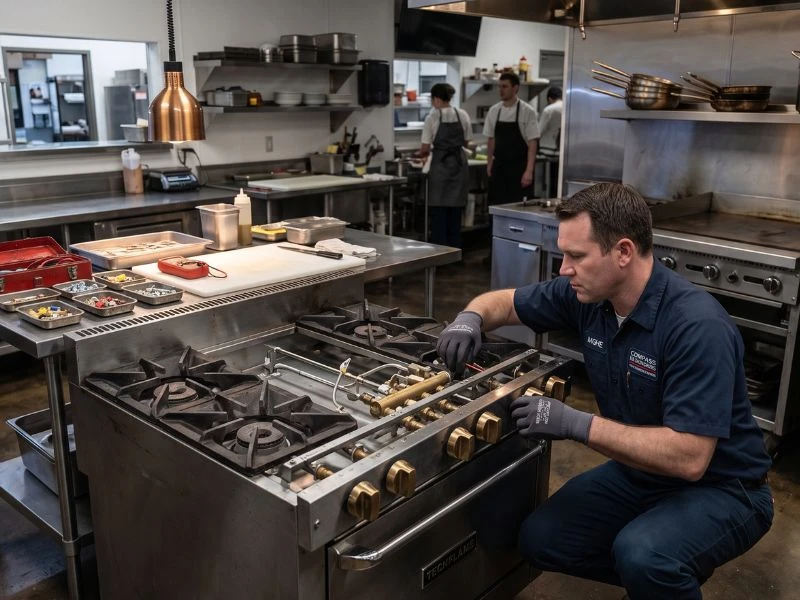
A cooktop can be central to everyday meal preparation at home and equally important in kitchens where cooking equipment is used throughout the working day. A malfunctioning unit can therefore create very different kinds of disruption depending on the property.
Residential customers may need a reliable burner for daily cooking, while commercial customers can be more concerned with keeping kitchen operations running without unnecessary equipment downtime.
We provide cooktop repair for both residential and commercial customers, including gas, electric, and induction equipment from major manufacturers.
When Repair Makes More Sense Than Replacing the Cooktop
A cooktop with a failed component is not automatically a replacement candidate. Some problems are isolated and can be addressed without replacing the complete appliance.
The decision becomes more complicated when the unit has significant physical damage, extensive wear, or a repair requirement that no longer fits the appliance's overall condition.
Understanding the actual fault first gives you better information for deciding whether restoring the existing cooktop is practical.
Local Cooktop Repair in Watsonville, CA
When a cooking zone stops heating or the controls no longer respond normally, getting the appliance evaluated can help prevent an isolated problem from becoming a larger interruption to your kitchen.
We provide cooktop repair in Watsonville, CA for heating, ignition, control, power, sensor, and related performance problems.
Our service covers Watsonville and the surrounding Pajaro Valley, with repair support for residential kitchens and commercial cooking environments.
Get Back to Reliable Cooking
If your cooktop is not heating correctly, a gas burner will not ignite, an induction zone is not detecting cookware, or the controls are behaving differently, contact us to discuss the symptoms.
We can help arrange cooktop repair in Watsonville, CA and determine the appropriate next step based on your appliance type and the behavior you are experiencing.
 Cooktop Repair
Common issues
- Burner or cooking zone does not heat
- Gas burner will not ignite
- Induction zone does not detect cookware
- Heating level changes unexpectedly
- Touch controls stop responding
- Cooktop loses power during use
- Gas burner keeps clicking
- Cooking zones heat inconsistently
- Display shows an unfamiliar error
- Cooktop shuts down during operation
Brands we service
GE, GE Profile, Whirlpool, KitchenAid, Maytag, Frigidaire, Samsung, LG, Bosch, Electrolux, Kenmore, JennAir, Viking, Wolf, and other major brands, and most other major residential brands.
FAQs
Cooktop Repair Questions
Answers to common questions about cooktop repair in Watsonville, CA.
Why is one burner on my cooktop not heating?
A single non-heating zone can have a problem with its heating element, ignition system, wiring, switch, sensor, or control circuit depending on the cooktop type. Comparing it with the other working zones can provide useful diagnostic information.
Why does my gas cooktop keep clicking?
Repeated clicking can occur when the ignition system continues trying to establish a flame or when another part of the ignition system is not operating normally. Persistent clicking should be professionally evaluated.
Why won't my gas cooktop burner ignite?
A burner that will not ignite can involve the ignition system, burner assembly, controls, or fuel-delivery components. The likely cause depends on whether one burner or several are affected.
Why does my induction cooktop not recognize my pan?
Induction cooktops rely on cookware detection as part of their heating process. If suitable cookware is not recognized, the issue may involve the cookware, detection system, controls, or electronic components.
Why is my electric cooktop heating slowly?
Slow heating can be associated with the heating element, control system, electrical connection, or another component affecting heat output. The specific cooktop model and symptom pattern help determine the cause.
Can you repair built-in cooktops?
Yes. Built-in gas, electric, and induction cooktops can be evaluated for heating, ignition, power, control, sensor, and related operating problems.
Can a cooktop with a damaged glass surface be repaired?
It depends on the type and extent of the damage and the appliance design. A damaged cooking surface should be evaluated before normal operation continues.
Do you provide commercial cooktop repair?
Yes. Cooktop repair is available for residential and commercial customers, including gas, electric, and induction cooking equipment.
Need a repair?
Need cooktop repair?
Tell us what’s wrong and we’ll help you find the next available appointment.