
Watsonville, CA
Kitchen Hood Repair
When your kitchen hood stops removing smoke, develops weak suction, makes unusual sounds, or has trouble with its fan, lights, or controls, we help identify the cause and determine the right repair solution.
Other Appliance Repair Services
Kitchen Hood Repair in Watsonville, CA
A kitchen hood helps move cooking smoke, steam, grease, heat, and odors away from the cooking area. When the hood is not moving air properly, the effects can become noticeable quickly: smoke may linger, cooking odors may remain in the kitchen, or the fan may become louder than usual.
Our kitchen hood repair service in Watsonville, CA focuses on finding the reason behind the problem rather than treating every ventilation issue as a motor failure. Depending on the symptoms, the cause may involve the blower, filters, controls, electrical components, airflow path, damper, or another part of the hood system.
Whether your range hood fan has stopped completely, suction has become noticeably weaker, the lights no longer work, or the hood is behaving inconsistently, identifying the source of the problem is the first step toward the appropriate repair.
Kitchen Hood Problems We Repair
Range hood problems can affect different functions of the appliance. Some issues involve the fan itself, while others are related to airflow restrictions, filters, controls, lighting, or the way the hood is connected to its ventilation path.
The symptom a homeowner notices can provide useful information about which part of the system should be examined.
Kitchen Hood Fan Not Working
If the hood lights work but the blower does not start, the problem may be related to the fan circuit, controls, blower connection, motor, or another electrical component. If both the lights and blower are inactive, the power supply and controls may also need to be considered.
A fan that has stopped completely should be diagnosed according to the hood's design and the symptoms present instead of assuming that the motor is automatically the cause.
Range Hood Has Weak Suction
Weak suction can prevent the hood from capturing cooking smoke and odors effectively. A heavily soiled filter, restricted ductwork, a damper that is not opening correctly, or another airflow restriction can reduce ventilation performance.
If cleaning or replacing the appropriate filter does not restore normal airflow, the rest of the ventilation path may need to be examined.
Kitchen Hood Not Removing Smoke or Odors
A hood that runs but leaves smoke or cooking odors in the kitchen may not be moving enough air through the system. Filter condition, duct restrictions, the exterior vent opening, damper operation, and the hood's ventilation configuration can all affect performance.
The hood's installation and ventilation design also matter. A ducted hood and a recirculating hood handle air differently, so the source of poor performance can vary between installations.
Range Hood Making Loud or Unusual Noises
A range hood can produce unusual sounds when the blower wheel, motor, fan assembly, or another component is not operating normally. Rattling, grinding, buzzing, or scraping sounds can also indicate that something is interfering with the moving parts.
The timing of the noise and the fan speed at which it occurs can help narrow down the possible source.
Range Hood Lights Not Working
Kitchen hood lighting is separate from the ventilation function, so the lights can sometimes fail while the fan continues operating. Depending on the model, the issue may involve the bulb or LED assembly, socket, switch, wiring, or electronic controls.
If the lighting problem continues after the appropriate light source has been checked, the electrical portion of the hood can be evaluated.
Range Hood Controls Not Responding
Buttons, switches, touch controls, and electronic interfaces allow the user to select fan speeds and lighting functions. A control problem can prevent one or more hood functions from responding correctly.
If only certain settings fail while others continue working, the pattern can provide useful information about the affected control circuit or component.
Range Hood Works on Some Speeds but Not Others
When a hood operates on one fan speed but not another, the problem may involve the speed-control system, switch, electronic control, motor circuit, or another related component.
Because different hood designs use different control systems, the exact cause should be determined from the model and the way the fan behaves at each setting.
Grease Filter and Airflow Problems
Grease filters collect particles from cooking and need appropriate maintenance to avoid excessive buildup. A heavily restricted filter can affect airflow and reduce the hood's ability to capture smoke and odors.
If the hood continues to have poor airflow after the correct filter has been cleaned or replaced, the duct, damper, blower, and other airflow components may need further attention.
Kitchen Hood Turning Off During Operation
A hood that repeatedly shuts off while running may have an electrical or motor-related issue. In some systems, excessive motor heat can cause protective shutdown behavior, while airflow restrictions and heavily soiled filters may contribute to operating stress.
Repeated cycling should not simply be ignored. The reason for the shutdown should be identified before continued operation.
Range Hood Not Venting Properly
A ducted range hood depends on a clear path for air to leave the appliance and the building. Restrictions in the duct, problems with the damper, blocked exterior termination, or installation-related airflow issues can interfere with ventilation.
For recirculating models, filter condition becomes especially important because the air is processed through the hood rather than exhausted directly outdoors.
Kitchen Hood Components We Diagnose and Repair
A kitchen hood combines mechanical, electrical, and airflow components to move and manage cooking air. The component involved depends on the symptom, hood configuration, and model design.
Understanding the relationship between these parts helps distinguish a fan problem from an airflow restriction or control issue.
Hood Blower Motor
The blower motor provides the mechanical force needed to move air through the hood. Motor problems can result in a fan that does not start, operates inconsistently, runs noisily, or does not perform as expected.
Blower Wheel and Fan Assembly
The blower wheel moves air through the hood system. Damage, obstruction, or an operating problem involving the fan assembly can affect airflow and may produce unusual sounds.
Fan Speed Controls
Speed controls regulate how the blower operates at different settings. A switch or electronic control problem can cause certain speeds to stop responding while others continue to work.
Motor Capacitor
Some hood designs use a capacitor as part of the motor's electrical system. A problem with this component can affect motor starting or operation, depending on the hood design.
Grease Filters
Metal grease filters help capture particles from cooking air before it moves through the ventilation system. Heavy buildup can restrict airflow and reduce hood performance.
Charcoal Filters
Recirculating or ductless hoods may use charcoal filtration to help manage cooking odors before filtered air returns to the kitchen. These filters have different maintenance requirements from washable metal grease filters.
Hood Control Board
Electronic control boards coordinate functions such as fan operation, speed selection, lighting, and other model-specific features. A control problem can affect one or several hood functions.
Lights and Lighting Components
Depending on the model, the hood may use bulbs, LED modules, sockets, switches, or electronic lighting controls. Problems in this portion of the appliance can leave the ventilation fan working while the lights remain off.
Dampers and Vent Connections
A damper helps manage airflow between the hood and its ventilation path. If the damper cannot open properly or the vent connection is restricted, the hood may have difficulty exhausting air.
Internal Wiring and Electrical Connections
Wiring and electrical connections distribute power to the hood's motor, controls, lights, and other components. A loose, damaged, or faulty connection can cause intermittent or complete loss of a particular function.
Ducted and Recirculating Kitchen Hoods
Not every kitchen hood handles air in the same way. Some models send air through ductwork to an exterior termination, while recirculating models filter the air and return it to the kitchen. Convertible designs may support more than one configuration.
Because the airflow path differs, diagnosing poor ventilation requires considering how the hood is installed and where the air is supposed to go.
Ducted Range Hoods
A ducted hood moves air through a connected ventilation path toward an exterior opening. Restricted ductwork, an improperly operating damper, or a blocked exterior termination can interfere with airflow.
If the blower sounds normal but the hood is not moving enough air, the ventilation path should be considered along with the filters and blower.
Recirculating or Ductless Hoods
A recirculating hood processes kitchen air through its filters and returns the filtered air to the room rather than exhausting it through an exterior duct.
Because airflow passes through filters, maintaining the appropriate filter system is important for normal operation. The type and maintenance requirements of the filters depend on the specific hood model.
Convertible Range Hoods
Some hoods can be configured for either external ventilation or recirculation. The correct configuration affects the airflow path, filters, and components involved in diagnosing performance problems.
Kitchen Hood Airflow and Ventilation Problems
Good hood performance depends on more than the blower motor. Air needs a reasonably clear path through the filter and hood and, for ducted systems, through the connected ventilation path and exterior termination.
This is why a hood that sounds like it is running can still have poor smoke capture. A restriction in the airflow path, a heavily loaded filter, a damper problem, or another ventilation issue can reduce the amount of air the system actually moves.
When investigating weak suction, the hood configuration and the condition of its filters and ventilation path should be considered together rather than replacing the motor without identifying the cause.
How We Diagnose Kitchen Hood Problems
Kitchen hood problems can involve several connected systems. A structured inspection helps separate electrical problems from mechanical faults and airflow restrictions.
Understand the Hood Symptoms
We start by identifying what the hood is doing differently. The symptoms may include no fan operation, weak airflow, unusual noise, lighting failure, inconsistent speeds, or poor smoke removal.
Check Fan and Ventilation Performance
The hood's blower operation and overall airflow behavior can be evaluated to determine whether the problem appears to be related to the fan itself or the path through which air is supposed to move.
Examine Filters and Airflow Path
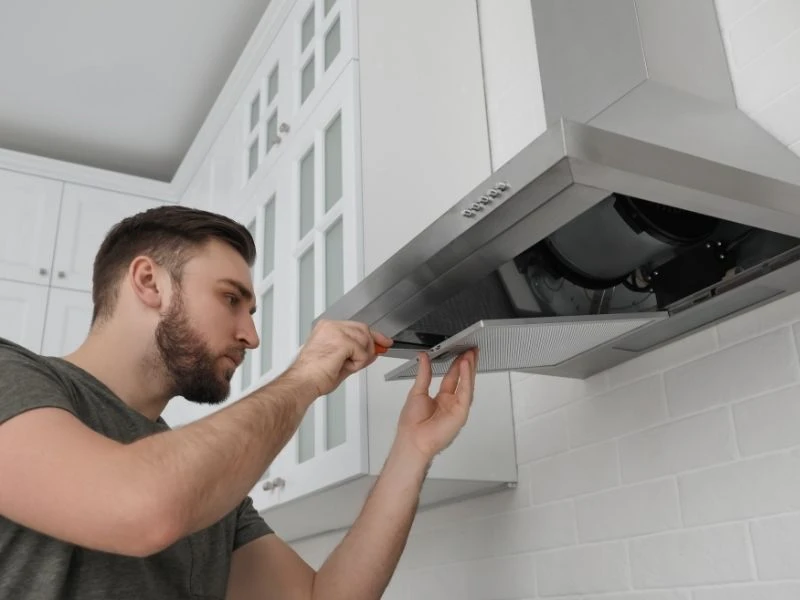
Filters, duct connections, dampers, and accessible ventilation areas can be considered when airflow is weak or smoke is not being captured effectively. Manufacturer guidance identifies filters and airflow restrictions as important factors in ventilation performance. :contentReference[oaicite:1]{index=1}
Test Electrical and Mechanical Components
Depending on the symptoms, controls, wiring, blower components, motor-related parts, switches, and other relevant components may need to be evaluated.
Locate the Source of the Problem
The objective is to determine whether the symptom comes from the hood itself, an airflow restriction, a control component, or another part of the ventilation system.
Verify Hood Operation
After the appropriate repair, the affected functions can be checked to make sure the fan, controls, lighting, and airflow are operating as expected for the hood.
When Should You Have Your Kitchen Hood Repaired?
A kitchen hood should be inspected when its performance changes noticeably or when an important function stops working. Persistent weak suction, unusual blower noise, repeated shutdowns, failed fan speeds, lighting problems, or unresponsive controls can all indicate that the appliance needs attention.
If the hood is running but cooking smoke and odors remain unusually persistent, the problem may not be the motor alone. Filters, dampers, duct restrictions, and the overall ventilation configuration can affect how well the system performs. :contentReference[oaicite:2]{index=2}
Kitchen Hood Brands We Service
Kitchen hoods are available in many configurations and may use different blower systems, controls, filters, and ventilation arrangements depending on the manufacturer and model.
We can work with a range of residential kitchen hood brands, depending on the specific appliance and repair requirements.
Common Kitchen Hood Brands
Common brands in the residential kitchen ventilation market include Whirlpool, GE, GE Profile, KitchenAid, Bosch, Samsung, LG, Frigidaire, Maytag, Broan, Zephyr, Wolf, Thermador, Viking, and Vent-A-Hood.
Kitchen Hood Repair in Watsonville, CA
A properly functioning kitchen hood can make a noticeable difference when cooking by helping move smoke, steam, grease, and odors away from the cooking area. When the blower, controls, filters, or ventilation path stop working as intended, the problem can affect the entire kitchen environment.
We provide kitchen hood repair in Watsonville, CA for homeowners dealing with fan failures, weak airflow, unusual noises, lighting problems, control issues, and other range hood concerns. Our approach focuses on identifying the source of the problem and determining a practical repair based on the appliance and its condition.
Schedule Kitchen Hood Repair in Watsonville, CA
Having trouble with your kitchen hood? Contact us to discuss the symptoms and schedule kitchen hood repair in Watsonville, CA. Whether the fan has stopped working, suction has become weak, the lights are not responding, or the hood is making unusual sounds, identifying the cause can help determine the right repair solution.
 Kitchen Hood Repair
Common issues
- Kitchen hood fan not working
- Range hood has weak suction
- Kitchen hood not removing smoke
- Range hood making unusual noises
- Range hood lights not working
- Range hood controls not responding
- Range hood working on only one speed
- Grease filter and airflow problems
- Kitchen hood turning off during operation
- Range hood not venting properly
Brands we service
Whirlpool, GE, GE Profile, KitchenAid, Bosch, Samsung, LG, Frigidaire, Maytag, Broan, Zephyr, Wolf, Thermador, Viking, Vent-A-Hood, and most other major residential brands.
FAQs
Kitchen Hood Repair Questions
Answers to common questions about kitchen hood repair in Watsonville, CA.
Why is my kitchen hood fan not working?
A kitchen hood fan may stop working because of a power or control issue, blower connection, motor problem, switch, wiring, or another component. If the lights work while the fan does not, the blower-related circuit may need to be examined.
Why is my range hood suction weak?
Weak suction can be caused by a heavily soiled filter, restricted ductwork, a damper problem, blower issues, or another airflow restriction. The hood's ventilation configuration should also be considered when diagnosing poor airflow.
Why is my kitchen hood not removing smoke?
A hood may struggle to remove smoke when airflow is restricted by filters, ductwork, dampers, or other parts of the ventilation path. The hood's design and installation can also affect how effectively it captures cooking air.
Why is my range hood making a loud noise?
A loud or unusual sound can come from the blower wheel, motor, fan assembly, or another component. Rattling, grinding, buzzing, or scraping noises can provide clues about which part may need inspection.
Why does my range hood work on one speed but not another?
A missing fan speed can be related to the speed switch, electronic control, motor circuit, or another component. The exact cause depends on the hood's control design and which settings continue to operate.
Can a dirty filter reduce range hood suction?
Yes. Grease buildup on a filter can restrict airflow and reduce ventilation performance. Manufacturer guidance recommends keeping applicable filters clean, while recirculating systems may also require the appropriate charcoal filter maintenance or replacement. :contentReference[oaicite:4]{index=4}
Need a repair?
Need kitchen hood repair?
Tell us what’s wrong and we’ll help you find the next available appointment.